

The use of a sunscreen SPF guide makes it easier to protect your skin from the damaging effects of the sun than a complicated skincare routine. Exposure to the sun can lead to sunburn, abnormal pigmentation, visible ageing of the skin, and build-up of skin damage. That depends on your type of exposure, skin type, skin routine, and time spent outdoors.
Don't think it's an adequate substitute for adequate product or frequent re-application. The sunscreen SPF guide is a blog that discusses what is meant by sun protection factor (SPF), SPF sunscreen options, broad-spectrum sunscreen, UVA and UVB protection, and sunscreen SPF differences in practical use of SPF 30 and SPF 50.
The most important measure you can take for healthy young skin is daily sun protection! Learn how SPF works and what an 'SPF' of broad-spectrum protection actually means, and help select the right sun cream for the day depending on your usual routine.
SPF means Sun Protection Factor. It primarily indicates how well sunscreen protects skin from UVB radiation, the main type of ultraviolet radiation associated with sunburn. It does not directly describe complete protection from every kind of UV exposure.
An SPF sunscreen should therefore be judged by more than its number. Look for broad-spectrum labelling too. A sunscreen SPF guide becomes much more useful when SPF and UVA coverage are considered together.
Using too little sunscreen reduces the protection stated on the label. For the face and neck, a practical approach is applying a generous, even layer rather than spreading a tiny amount until it disappears.
For exposed body areas, more product is needed. Ears, necks, hands, hairlines, and the tops of feet are often missed. They still receive sunlight.
Don't Miss: Niacinamide for Skin: Benefits, Uses, and How It Works
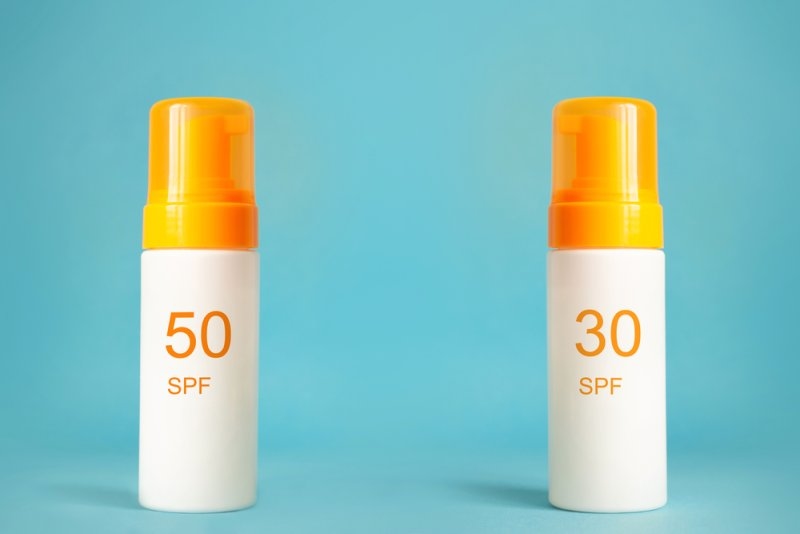
The sunscreen SPF guide needs one clarification here: SPF 50 is not simply twice as protective as SPF 30. The numbers describe different levels of UVB protection under standardized testing, while real-world protection also depends heavily on application and reapplication.
SPF 30 sunscreen is a reasonable daily option for many people, particularly when exposure is moderate, and sunscreen is applied generously. It filters a large majority of UVB radiation when tested correctly.
For office days, commuting, short errands, and normal outdoor exposure, SPF 30 sunscreen can fit comfortably into a daily routine. The catch is simple: it must actually be used.
SPF 50 sunscreen provides a higher level of labelled UVB protection than SPF 30 sunscreen. SPF 50 sunscreen works well for long days outside—think strong sun, the beach, sports, or travel, or if you just worry about getting sunburnt.
Still, using SPF 50 doesn’t mean you can hang out in the sun all day without reapplying. Sweat, water, rubbing, and time all break down that protection. So you really do have to put it on again, even with the higher SPF.
| Factor | SPF 30 Sunscreen | SPF 50 Sunscreen |
|---|---|---|
| UVB protection | High | Higher |
| Daily use | Suitable for many routines | Suitable for many routines |
| Strong outdoor exposure | May require more care | Often preferred for added margin |
| Reapplication | Required | Required |
| UVA protection | Depends on the broad-spectrum label | Depends on broad spectrum label |
The practical sunscreen SPF 30 vs 50 decision is less about chasing the biggest number and more about exposure, application, and consistency.
A broad spectrum sunscreen is designed to protect against both UVA and UVB radiation. That matters because UVB is strongly associated with sunburn, while UVA penetrates more deeply and contributes to photoaging and pigmentation.
Choose a broad spectrum sunscreen for regular daytime use rather than relying only on the SPF number. SPF sunscreen ratings mainly communicate UVB protection; broad spectrum labelling addresses protection across UVA and UVB wavelengths.
What does broad spectrum mean on sunscreen? When you see broad-spectrum on the label, that means the sunscreen covers both UVA and UVB rays. Don’t automatically assume every high-SPF bottle does this—check the label to be sure.
UVA and UVB protection should be treated as two parts of the same routine. UVA exposure is associated with premature skin aging and pigmentation, while UVB is a major cause of sunburn.
A good sunscreen SPF guide therefore considers both. SPF 30 sunscreen or SPF 50 sunscreen should ideally also be broad spectrum sunscreen.
Suggested Reading: Skin Barrier Repair Routine for Healthy Skin in 2026
How to choose the right SPF sunscreen depends on exposure rather than skin tone alone. Someone sitting most of the day indoors has a different exposure pattern from someone working outside, driving for hours, exercising outdoors, or spending weekends at the beach.
For many adults, SPF 30 or higher broad spectrum sunscreen is a practical starting point for daily use. SPF 50 sunscreen can provide additional UVB protection when outdoor exposure is longer or stronger.
The better product is usually the one you will apply correctly and reapply consistently. Texture matters too. If a sunscreen feels unpleasant, leaves heavy residue, or irritates your skin, daily use often becomes inconsistent.
A higher SPF does block more UVB rays, but the jump isn’t as big as the numbers might suggest. SPF 50 blocks more than SPF 30, but neither one is perfect; some UVB still gets through.
You also lose protection if you use too little or forget to reapply. Higher SPF cannot compensate for poor application habits.
Sunscreen protection works better when sunscreen becomes a routine rather than something applied only before holidays. Apply it as the final major step of your morning skincare routine, before makeup if makeup is used.
Try to put on sunscreen every two hours when you’re out, especially if you’re swimming, sweating, or towelling off. Water-resistant sunscreens help if you’re active, but you still need to follow the instructions and reapply as needed.
Finally, don’t rely on sunscreen alone. Shade, hats, sunglasses, and clothes all add another layer. Sunscreen is just part of the solution—it’s not a magic shield.
Someone commuting for 30 minutes, working indoors, then returning home may use broad spectrum SPF 30 sunscreen as part of their morning routine, with extra attention to exposed areas.
Someone spending several hours outdoors may choose SPF 50 sunscreen, apply it generously, and then reapply during continued exposure. Same basic routine. Different exposure level.
Also Read: Ceramides in Skincare & What They Are For, Why You Need Them
The key principles of a useful sunscreen guide include using a broad-spectrum product, selecting a sun protection level appropriate to the amount of exposure you are likely to have, applying a sufficient amount of product, and using an effective product when staying in the sun for an extended time. SPF 30 may be suitable for normal, everyday use of sunscreen, and SPF 50 may provide greater UVB protection if an added margin of safety is desired.
However, don't get the wrong impression: The sunscreen SPF guide isn't simply about upsizing the SPF value. Both UVA and UVB are important; application and sensible sun habits are important. These pieces are most effective when worn together on a daily basis. They are most effective when used together and every day while wearing sunscreen.
Yes, it is possible that a product is adversely affected by poor storage even before its stated expiration date. Some preparations may degrade with heat or exposure to direct sunlight or repeated exposure to inappropriate conditions.
Generally, a cool, dry location is preferred. Room temperatures of bathrooms can get warm and humid, and these conditions are not necessarily good for extended storage of products.
Yes. Be careful with some formulas, as they may leave marks or transfer onto fabric, especially if they are applied heavily or in an insufficiently settled state. This can be minimised if it is allowed to set.
Some liquid and fluid formulas do. Always read the product directions, as instructions for the formulation vary. Shake well if necessary before using, as indicated on the label.
Of course, it can, particularly with more substantive or very soft cosmetics. If you're using a makeup base, let the sunscreen settle into your skin first to prevent uneven application and pilling.
This content was created by AI